Let's Begin Your World.
Looking Ahead 20 Years Into The Future.
Believing in and watching over children's "ability to think for themselves and act for themselves."
Creating an environment where each child's own interests can grow and flourish, at their own pace.
These are the founding principles behind Reggio Emilia education, an approach we hold at the heart of what we do.
We want the time each child spends in Bangkok,
Thailand to become the very first step toward blossoming into their own unique self.
We'll be there, watching over them, every step of the way.
*Reggio Emilia education is an early childhood education approach that originated in the city of Reggio Emilia, Italy.
It's designed to nurture children's creativity and help them develop independence and self-direction.Individuality, given room to grow.
Let's Begin Your World.
Looking Ahead 20 Years Into The Future.
Believing in and watching over children's "ability to think for themselves and act for themselves."
Creating an environment where each child's own interests can grow and flourish, at their own pace.
私たちは、そんな考え方が基本にある
レッジョエミリア教育を大切にしています。
We want the time each child spends in Bangkok,
Thailand to become the very first step toward blossoming into their own unique self.
We'll be there, watching over them, every step of the way.
*Reggio Emilia education is an early childhood education approach that originated in the city of Reggio Emilia, Italy.
It's designed to nurture children's creativity and help them develop independence and self-direction.Individuality, given room to grow.
Let's Begin Your World.
Looking Ahead 20 Years Into The Future.
「じぶんで考え、じぶんで行動するチカラ」を信じて、見守ってあげること。一人ひとりの「すき」をすくすくと伸ばせる環境を整えること。
These are the founding principles behind Reggio Emilia education, an approach we hold at the heart of what we do.
タイ・バンコクで過ごす時間が、一人ひとりの個性を開花させる最初の一歩となるように。私たちは、子どもたちのすぐ近くで見守ります。
*Reggio Emilia education is an early childhood education approach that originated in the city of Reggio Emilia, Italy. It's designed to nurture children's creativity and help them develop independence and self-direction.

Our Childcare Philosophy
A future that grows steadily,
one step at a time.
The individuality each child is born with is a treasure. By nurturing that individuality, children build a world that only they could create, one that becomes a lifelong asset.
Growing what a child loves,
building the foundation to thrive on a global stage.
As the saying goes, "you're always best at what you love." Passion is the greatest source of energy and strength there is! Through many different experiences, we help children discover the things they love, so they can spread their wings toward the world.
Experience, expression,
and challenge.
Seeing is believing. By seeing and touching things with their own eyes and hands, and by going through the process of expressing themselves and taking on challenges, each child gains their own unique kind of learning.

Our Childcare Philosophy
個性にのびのび。未来すくすく。
The individuality each child is born with is a treasure. By nurturing that individuality, children build a world that only they could create, one that becomes a lifelong asset.
Growing what a child loves,
building the foundation to thrive on a global stage.
As the saying goes, "you're always best at what you love." Passion is the greatest source of energy and strength there is! Through many different experiences, we help children discover the things they love, so they can spread their wings toward the world.
体験、表現、チャレンジ。
Seeing is believing. By seeing and touching things with their own eyes and hands, and by going through the process of expressing themselves and taking on challenges, each child gains their own unique kind of learning.
Our Childcare Philosophy
個性のびのび。未来すくすく。
The individuality each child is born with is a treasure. By nurturing that individuality, children build a world that only they could create, one that becomes a lifelong asset.
Growing what a child loves,
building the foundation to thrive on a global stage.
As the saying goes, "you're always best at what you love." Passion is the greatest source of energy and strength there is! Through many different experiences, we help children discover the things they love, so they can spread their wings toward the world.
体験、表現、チャレンジ。
Seeing is believing. By seeing and touching things with their own eyes and hands, and by going through the process of expressing themselves and taking on challenges, each child gains their own unique kind of learning.
We nurture 5 kinds of curiosity that become lifelong assets
1. Creativity

Growing the imagination
through the Reggio Emilia approach
Creativity is one of the most important skills children will need in the future. As IT advances and AI evolves, the abilities unique to humans will become even more valuable. Twenty years from now, when today's children are adults, creativity will matter more than ever. Children are born with unique imaginations. By creating an environment where creativity can flourish, we help new ideas and original creations take shape. Through self-expression and challenges that engage all five senses, children build confidence. A safe environment where mistakes are welcomed helps children grow without fear of failure.
2. Physical Ability

Moving the body
enriches the heart
It's said that the neural pathways responsible for physical movement are about 80% developed by age 5 or 6. That's why, during the important years of ages 3 to 5, Yume Terasu provides age-appropriate programs that build physical coordination and body awareness. From swimming lessons with professional instructors to running freely on a futsal court, children experience a wide variety of activities rather than repeating the same movements. Through these experiences, they develop not only physical strength but also creativity, sensitivity, and the ability to express themselves through movement. We believe children grow best when encouraged to explore what genuinely interests them. Instead of adults deciding what they should do, we start with each child's natural curiosity and build from there.
3. IT Literacy (STEAM Education)

Turning technology into a life skill.
STEAM education—Science, Technology, Engineering, Art, and Mathematics—has long been part of education in the United States and is now considered essential for the future. Its goal is to introduce children to science, numbers, robotics, and IT from an early age, helping them develop the ability to learn independently. By seeing technology as a natural part of everyday life rather than something difficult, children gain the skills to think and act with a global perspective. Today's world values more than memorization—it requires the ability to identify problems, think critically, and create solutions on their own.
4. English Ability

Making English feel like a native language.
Twenty years from now, when today's children are adults, globalization will likely be the norm. Children who spend their early years living abroad are already experiencing that future, while also gaining a valuable opportunity to learn a second language. Early childhood is when children absorb English naturally through everyday experiences. Research suggests that children who acquire both a first and second language by around age 5 can process them similarly, making native-level fluency in both possible. At Yume Terasu, we make the most of this important stage by building English communication skills that prepare children for an increasingly global society.
5. Communication Skills

The ability to thrive in a diverse society.
Communication skills are what's needed to convey your own thoughts and feelings to others. Because these skills are built up gradually through daily practice and real experience, they aren't something a child masters overnight. Our facility uses mixed-age childcare, where children of different ages learn from and inspire one another. Through contact with different values and many different people, children build richer thinking skills, learning to understand their own place within a diverse society, including through the experience of making mistakes along the way.
We nurture 5 kinds of curiosity that become lifelong assets
1. Creativity
Growing the imagination
レッジョエミリア教育アプローチ
Creativity is one of the most important skills children will need in the future. As IT advances and AI evolves, the abilities unique to humans will become even more valuable. Twenty years from now, when today's children are adults, creativity will matter more than ever. Children are born with unique imaginations. By creating an environment where creativity can flourish, we help new ideas and original creations take shape. Through self-expression and challenges that engage all five senses, children build confidence. A safe environment where mistakes are welcomed helps children grow without fear of failure.
2. Physical Ability
Moving the bodyenriches the heart
It's said that the neural pathways responsible for physical movement are about 80% developed by age 5 or 6. That's why, during the important years of ages 3 to 5, Yume Terasu provides age-appropriate programs that build physical coordination and body awareness. From swimming lessons with professional instructors to running freely on a futsal court, children experience a wide variety of activities rather than repeating the same movements. Through these experiences, they develop not only physical strength but also creativity, sensitivity, and the ability to express themselves through movement. We believe children grow best when encouraged to explore what genuinely interests them. Instead of adults deciding what they should do, we start with each child's natural curiosity and build from there.
3. IT Literacy (STEAM Education)
Turning technology into a life skill.
STEAM education—Science, Technology, Engineering, Art, and Mathematics—has long been part of education in the United States and is now considered essential for the future. Its goal is to introduce children to science, numbers, robotics, and IT from an early age, helping them develop the ability to learn independently. By seeing technology as a natural part of everyday life rather than something difficult, children gain the skills to think and act with a global perspective. Today's world values more than memorization—it requires the ability to identify problems, think critically, and create solutions on their own.
4. English Ability
Making English feel like a native language.
Twenty years from now, when today's children are adults, globalization will likely be the norm. Children who spend their early years living abroad are already experiencing that future, while also gaining a valuable opportunity to learn a second language. Early childhood is when children absorb English naturally through everyday experiences. Research suggests that children who acquire both a first and second language by around age 5 can process them similarly, making native-level fluency in both possible. At Yume Terasu, we make the most of this important stage by building English communication skills that prepare children for an increasingly global society.
5. Communication Skills
The ability to thrive in a diverse society.
Communication skills are what's needed to convey your own thoughts and feelings to others. Because these skills are built up gradually through daily practice and real experience, they aren't something a child masters overnight. Our facility uses mixed-age childcare, where children of different ages learn from and inspire one another. Through contact with different values and many different people, children build richer thinking skills, learning to understand their own place within a diverse society, including through the experience of making mistakes along the way.
将来の財産になる
5つの好奇心を育てます
1. Creativity
Growing the imagination
レッジョエミリア教育
アプローチ
Creativity is one of the most important skills children will need in the future. As IT advances and AI evolves, the abilities unique to humans will become even more valuable. Twenty years from now, when today's children are adults, creativity will matter more than ever. Children are born with unique imaginations. By creating an environment where creativity can flourish, we help new ideas and original creations take shape. Through self-expression and challenges that engage all five senses, children build confidence. A safe environment where mistakes are welcomed helps children grow without fear of failure.
2. Physical Ability
Moving the body
enriches the heart
It's said that the neural pathways responsible for physical movement are about 80% developed by age 5 or 6. That's why, during the important years of ages 3 to 5, Yume Terasu provides age-appropriate programs that build physical coordination and body awareness. From swimming lessons with professional instructors to running freely on a futsal court, children experience a wide variety of activities rather than repeating the same movements. Through these experiences, they develop not only physical strength but also creativity, sensitivity, and the ability to express themselves through movement. We believe children grow best when encouraged to explore what genuinely interests them. Instead of adults deciding what they should do, we start with each child's natural curiosity and build from there.
3. ITリテラシー
(STEAM教育)
テクノロジーを生きるチカラに。
STEAM education—Science, Technology, Engineering, Art, and Mathematics—has long been part of education in the United States and is now considered essential for the future. Its goal is to introduce children to science, numbers, robotics, and IT from an early age, helping them develop the ability to learn independently. By seeing technology as a natural part of everyday life rather than something difficult, children gain the skills to think and act with a global perspective. Today's world values more than memorization—it requires the ability to identify problems, think critically, and create solutions on their own.
4. English Ability
Making English feel like a native language.
Twenty years from now, when today's children are adults, globalization will likely be the norm. Children who spend their early years living abroad are already experiencing that future, while also gaining a valuable opportunity to learn a second language. Early childhood is when children absorb English naturally through everyday experiences. Research suggests that children who acquire both a first and second language by around age 5 can process them similarly, making native-level fluency in both possible. At Yume Terasu, we make the most of this important stage by building English communication skills that prepare children for an increasingly global society.
5. Communication Skills
The ability to thrive in a diverse society.
Communication skills are what's needed to convey your own thoughts and feelings to others. Because these skills are built up gradually through daily practice and real experience, they aren't something a child masters overnight. Our facility uses mixed-age childcare, where children of different ages learn from and inspire one another. Through contact with different values and many different people, children build richer thinking skills, learning to understand their own place within a diverse society, including through the experience of making mistakes along the way.
Specialist Coach Programs
These are curriculums and lessons led by teachers from outside partner organizations.Rather than needing to attend extracurricular lessons after school or on weekends, children can enjoy a variety of experiences with their friends during regular childcare hours. The cost is included in tuition.

STEAM Education
Twice a month

Gymnastics
Once a week

Swimming
Twice a month

Dance
Once a week

English
Once a week
*The content of the curriculum may be subject to change at any time.
Specialist Coach Programs
These are curriculums and lessons led by teachers from outside partner organizations.Rather than needing to attend extracurricular lessons after school or on weekends, children can enjoy a variety of experiences with their friends during regular childcare hours. The cost is included in tuition.
STEAM
教育
Twice a month
Gymnastics
Once a week
Swimming
Twice a month
Dance
Once a week
English
Once a week
*The content of the curriculum may be subject to change at any time.
Specialist Coach Programs
These are curriculums and lessons led by teachers from outside partner organizations.
Rather than needing to attend extracurricular lessons after school or on weekends, children can enjoy a variety of experiences with their friends during regular childcare hours. をご用意しております。
費用は保育料に含まれます。
STEAM Education
Twice a month
Gymnastics
Once a week
Swimming
Twice a month
Dance
Once a week
English
Once a week
*The content of the curriculum may be subject to change at any time.
Childcare Hours
| Regular hours | [2:00 PM departure course] 9:00〜14:00 [4:00 PM departure course] 9:00〜16:00 |
| Early morning care | 7:30〜8:30 |
| Extended (after-hours) care | 〜17:00 |
Early morning care and extended care are both charged at 200 baht per hour.
For extended care, parents are responsible for picking up their child themselves.
Childcare Hours
| Regular hours | [2:00 PM departure course] 9:00〜14:00 [4:00 PM departure course] 9:00〜16:00 |
| Early morning care | 7:30〜8:30 |
| Extended (after-hours) care | 〜17:00 |
Early morning care and extended care are both charged at 200 baht per hour.
For extended care, parents are responsible for picking up their child themselves.
Childcare Hours
| Regular hours | [2:00 PM departure course] 9:00〜14:00 [4:00 PM departure course] 9:00〜16:00 |
| Early morning care | 7:30〜8:30 |
| Extended (after-hours) care | 〜17:00 |
Early morning care and extended care are both charged at 200 baht per hour.
For extended care, parents are responsible for picking up their child themselves.
Daily Schedule
This is a sample of a typical day; the schedule may vary depending on activities or events.
Arrival
Handwashing, getting ready, bathroom, health check, indoor play
Morning circle time (finger games, songs, greetings, attendance check, etc.)
Snack
Main activity
(Thonglor campus includes outdoor playground activities)
Handwashing / Lunch preparation
Lunch
Indoor play
Afternoon activity
Picture books, kamishibai (illustrated storytelling), read-aloud time, etc.
Closing circle time (finger games, songs, dance, greetings)
[2:00 PM course children] Departure
[4:00 PM course children] Activity
[4:00 PM course children] Snack / indoor play
[4:00 PM course children] Departure
Extended (after-hours) care
Daily Schedule
This is a sample of a typical day; the schedule may vary depending on activities or events.
Arrival
Handwashing, getting ready, bathroom, health check, indoor play
Morning circle time (finger games, songs, greetings, attendance check, etc.)
Snack
Main activity
(Thonglor campus includes outdoor playground activities)
Handwashing / Lunch preparation
Lunch
Indoor play
Afternoon activity
Picture books, kamishibai (illustrated storytelling), read-aloud time, etc.
Closing circle time (finger games, songs, dance, greetings)
[2:00 PM course children] Departure
[4:00 PM course children] Activity
[4:00 PM course children] Snack / indoor play
[4:00 PM course children] Departure
Extended (after-hours) care
Daily Schedule
This is a sample of a typical day; the schedule may vary depending on activities or events.
Arrival
Handwashing, getting ready, bathroom, health check, indoor play
Morning circle time (finger games, songs, greetings, attendance check, etc.)
Snack
主活動(トンロー園は園庭での活動あり)
Handwashing / Lunch preparation
Lunch
Indoor play
Afternoon activity
Picture books, kamishibai (illustrated storytelling), read-aloud time, etc.
Closing circle time (finger games, songs, dance, greetings)
[2:00 PM course children] Departure
[4:00 PM course children] Activity
【16時コース園児】
おやつ・室内遊び
[4:00 PM course children] Departure
Extended (after-hours) care
About Extracurricular Programs
For families who are interested, we also offer extracurricular childcare programs after school hours.
On-campus extracurricular activities: Cheerdance, Muay Thai, Japanese taiko drumming, swimming, abacus (soroban), karate, soccer, math (worksheet-based)
Off-campus extracurricular activities: English conversation (an extracurricular program led by an English-language community partner is available; please contact us individually for details)
About Extracurricular Programs
For families who are interested, we also offer extracurricular childcare programs after school hours.
| チアダンス | 水曜日 14:30〜15:20 |
| ムエタイ | 木曜日 14:15〜15:00 |
| 和太鼓 | 火曜日 14:30〜15:20(年少は15:00まで) |
| English | コミュニティ英会話さん主導の課外有り。個別にお問い合わせください。 |
| そろばん | SANARUのそろばんの先生主導の課外有り。個別にお問い合わせください。 |
About Extracurricular Programs
For families who are interested, we also offer extracurricular childcare programs after school hours.
| チアダンス | 水曜日 14:30〜15:20 |
| ムエタイ | 木曜日 14:15〜15:00 |
| 和太鼓 | 火曜日 14:30〜15:20(年少は15:00まで) |
| English | コミュニティ英会話さん主導の課外有り。個別にお問い合わせください。 |
| そろばん | SANARUのそろばんの先生主導の課外有り。個別にお問い合わせください。 |
Curriculum
Food education, art, arts and crafts, Thai language, gymnastics, park walks, eurythmics, singing, handwriting practice, calligraphy, English, jump rope (group and individual), birthday celebrations, painting, 3D art, group games, disaster preparedness drills, personal safety education, field trips, career experience days, environmental education, birthday celebrations, and more.
Curriculum
Food education, art, arts and crafts, Thai language, gymnastics, park walks, eurythmics, singing, handwriting practice, calligraphy, English, jump rope (group and individual), birthday celebrations, painting, 3D art, group games, disaster preparedness drills, personal safety education, field trips, career experience days, environmental education, birthday celebrations, and more.
Curriculum
Food education, art, arts and crafts, Thai language, gymnastics, park walks, eurythmics, singing, handwriting practice, calligraphy, English, jump rope (group and individual), birthday celebrations, painting, 3D art, group games, disaster preparedness drills, personal safety education, field trips, career experience days, environmental education, birthday celebrations, and more.
Annual Events
Term 1 (April–August)
Mother's Day, Children's Day, Father's Day, Summer Festival & pretend shop day, Bento (packed lunch) Day, Dental Health Week, dental checkup, Easter, entrance ceremony, individual parent meetings, marathon event, Tanabata (Star Festival), field trip, disaster preparedness drill, personal safety education, Muay Thai experience, chopstick-use day (Ohashi Day)
Term 2 (September–December)
Respect for the Aged Day, school outing, Loy Krathong, Halloween, Bento Day, jump rope challenge event, Christmas gathering, Christmas, year-end performance, sports day, overnight stay/fun event, disaster preparedness drill, personal safety education, field trip, chopstick-use day (Ohashi Day)
Term 3 (January–March)
New Year calligraphy contest, Hinamatsuri (Girls' Festival), Setsubun (bean-throwing festival), environmental education, Bento Day, graduation ceremony, art exhibition, jump rope challenge event, personal safety education, farewell outing, field trip, chopstick-use day (Ohashi Day)
*Underlined events are events with parent participation.
*Please understand that the timing of events may shift depending on the number of enrolled children or scheduling arrangements with the facility.
Annual Events
Term 1 (April–August)
Mother's Day, Children's Day, Father's Day, Summer Festival & pretend shop day, Bento (packed lunch) Day, Dental Health Week, dental checkup, Easter, entrance ceremony, individual parent meetings, marathon event, Tanabata (Star Festival), field trip, disaster preparedness drill, personal safety education, Muay Thai experience, chopstick-use day (Ohashi Day)
Term 2 (September–December)
Respect for the Aged Day, school outing, Loy Krathong, Halloween, Bento Day, jump rope challenge event, Christmas gathering, Christmas, year-end performance, sports day, overnight stay/fun event, disaster preparedness drill, personal safety education, field trip, chopstick-use day (Ohashi Day)
Term 3 (January–March)
New Year calligraphy contest, Hinamatsuri (Girls' Festival), Setsubun (bean-throwing festival), environmental education, Bento Day, graduation ceremony, art exhibition, jump rope challenge event, personal safety education, farewell outing, field trip, chopstick-use day (Ohashi Day)
*Underlined events are events with parent participation.
*Please understand that the timing of events may shift depending on the number of enrolled children or scheduling arrangements with the facility.
Annual Events
Term 1 (April–August)
Mother's Day, Children's Day, Father's Day, Summer Festival & pretend shop day, Bento (packed lunch) Day, Dental Health Week, dental checkup, Easter, entrance ceremony, individual parent meetings, marathon event, Tanabata (Star Festival), field trip, disaster preparedness drill, personal safety education, Muay Thai experience, chopstick-use day (Ohashi Day)
Term 2 (September–December)
Respect for the Aged Day, school outing, Loy Krathong, Halloween, Bento Day, jump rope challenge event, Christmas gathering, Christmas, year-end performance, sports day, overnight stay/fun event, disaster preparedness drill, personal safety education, field trip, chopstick-use day (Ohashi Day)
Term 3 (January–March)
New Year calligraphy contest, Hinamatsuri (Girls' Festival), Setsubun (bean-throwing festival), environmental education, Bento Day, graduation ceremony, art exhibition, jump rope challenge event, personal safety education, farewell outing, field trip, chopstick-use day (Ohashi Day)
*Underlined events are events with parent participation.
*Please understand that the timing of events may shift depending on the number of enrolled children or scheduling arrangements with the facility.
About Lunch
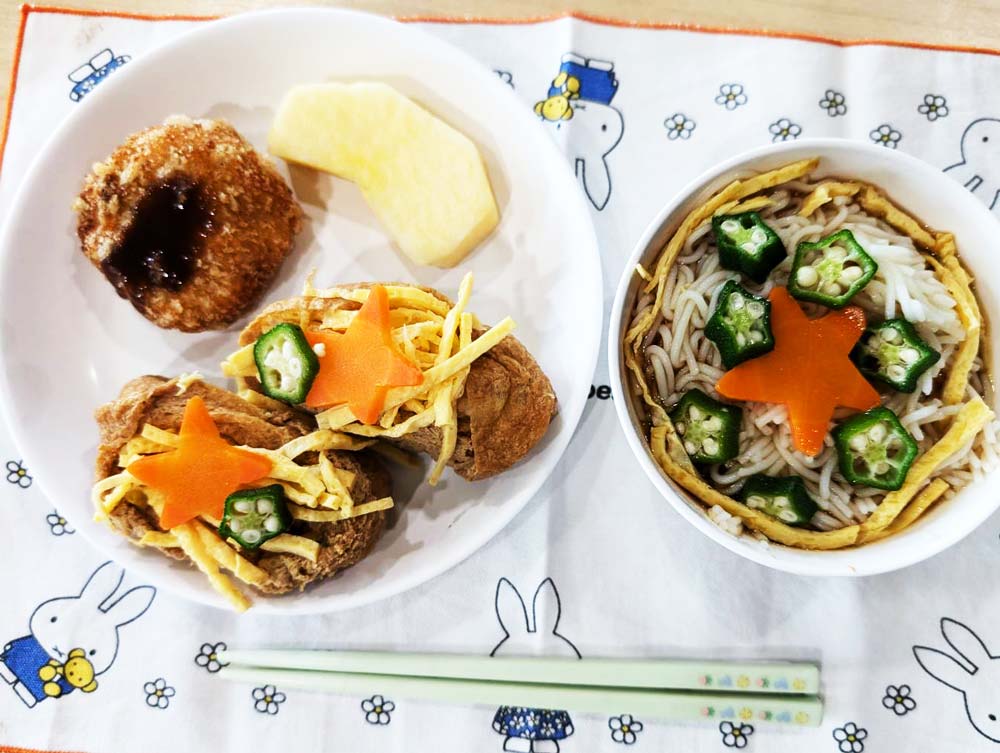
Lunch is provided every day, with one Bento (packed lunch) Day planned each term.
The menu is distributed to parents in advance.
*We can accommodate mild allergies, so please feel free to consult with us.
About Lunch
Lunch is provided every day, with one Bento (packed lunch) Day planned each term.
The menu is distributed to parents in advance.
*We can accommodate mild allergies, so please feel free to consult with us.
About Lunch
Lunch is provided every day, with one Bento (packed lunch) Day planned each term.
The menu is distributed to parents in advance.
*We can accommodate mild allergies, so please feel free to consult with us.
About the School Bus
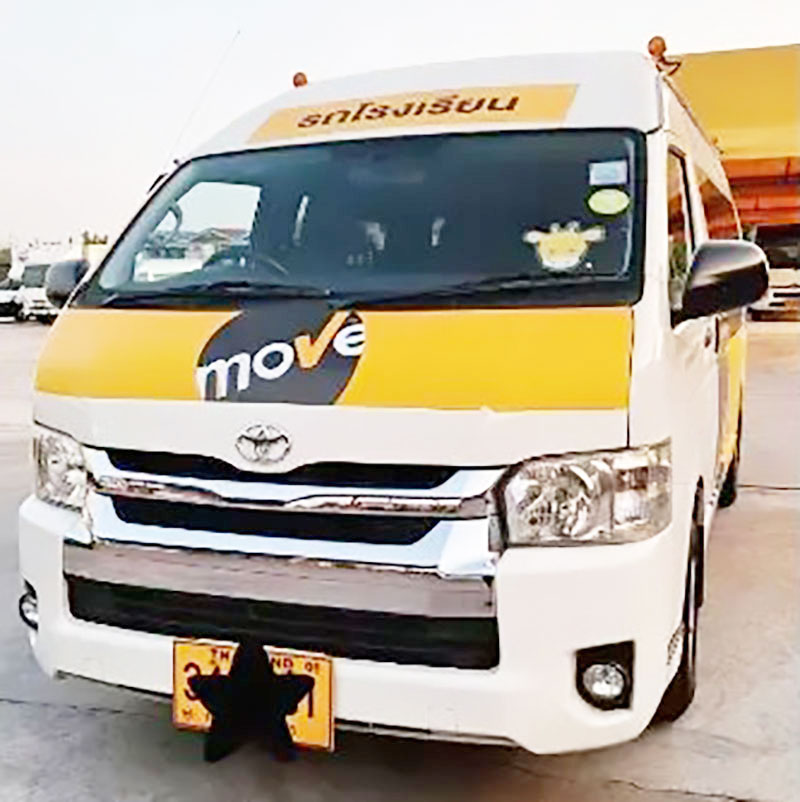
- The bus service is operated in partnership with an external company: the bus vehicle and driver are provided by Move, while the attendant on board is a Yumeterasu childcare staff member.
- Parents can check the bus's location and their child's pickup/drop-off times through an app, and each bus is equipped with GPS.
- Between 7:15 AM and 9:00 AM, the bus visits the lobby of each condominium on its route.
- Bus times may change depending on the number of children, the route, and traffic conditions.
About the School Bus
- The bus service is operated in partnership with an external company: the bus vehicle and driver are provided by Move, while the attendant on board is a Yumeterasu childcare staff member.
- Parents can check the bus's location and their child's pickup/drop-off times through an app, and each bus is equipped with GPS.
- Between 7:15 AM and 9:00 AM, the bus visits the lobby of each condominium on its route.
- Bus times may change depending on the number of children, the route, and traffic conditions.
About the School Bus
- The bus service is operated in partnership with an external company: the bus vehicle and driver are provided by Move, while the attendant on board is a Yumeterasu childcare staff member.
- Parents can check the bus's location and their child's pickup/drop-off times through an app, and each bus is equipped with GPS.
- Between 7:15 AM and 9:00 AM, the bus visits the lobby of each condominium on its route.
- Bus times may change depending on the number of children, the route, and traffic conditions.
About Uniforms and Gym Clothes
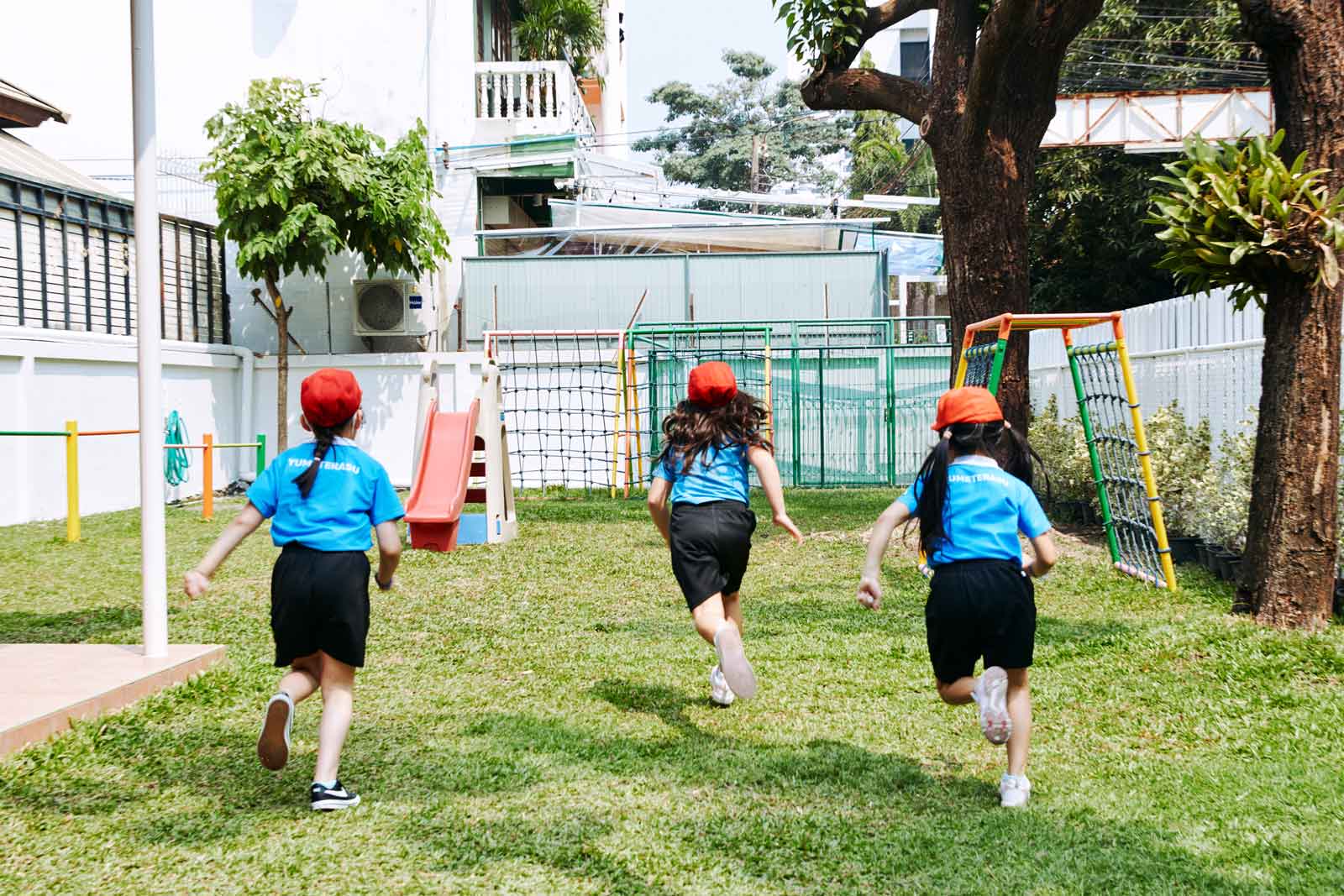
The Yochibu program uses school uniforms: either a light-blue dress, or a light-blue shirt and pants set, plus a hat. Families may choose either the skirt-style or pants-style uniform.
Children wear their uniform to school every day, then change into gym clothes for daytime activities after arriving. At the end of the day, they change back into their uniform before going home.
About Uniforms and Gym Clothes
The Yochibu program uses school uniforms: either a light-blue dress, or a light-blue shirt and pants set, plus a hat. Families may choose either the skirt-style or pants-style uniform.
Children wear their uniform to school every day, then change into gym clothes for daytime activities after arriving. At the end of the day, they change back into their uniform before going home.
About Uniforms and Gym Clothes
The Yochibu program uses school uniforms: either a light-blue dress, or a light-blue shirt and pants set, plus a hat. Families may choose either the skirt-style or pants-style uniform.
Children wear their uniform to school every day, then change into gym clothes for daytime activities after arriving. At the end of the day, they change back into their uniform before going home.
About Photos During Childcare
Photos of the children are uploaded to an official LINE group for enrolled families only. Albums are deleted at the end of each term, so if you'd like to keep the photo data, please download them regularly.
Photos are taken to share children's everyday moments with families, but since childcare always comes first, we're not able to take and upload photos every single day. Please understand that the number of photos may vary somewhat from day to day.
About Photos During Childcare
Photos of the children are uploaded to an official LINE group for enrolled families only. Albums are deleted at the end of each term, so if you'd like to keep the photo data, please download them regularly.
Photos are taken to share children's everyday moments with families, but since childcare always comes first, we're not able to take and upload photos every single day. Please understand that the number of photos may vary somewhat from day to day.
About Photos During Childcare
Photos of the children are uploaded to an official LINE group for enrolled families only. Albums are deleted at the end of each term, so if you'd like to keep the photo data, please download them regularly.
Photos are taken to share children's everyday moments with families, but since childcare always comes first, we're not able to take and upload photos every single day. Please understand that the number of photos may vary somewhat from day to day.
Documents Required at Enrollment
- Application form
- Copy of passport (photo page) for both the child and parent(s)
- Power of attorney
- Payment Statement (image or paper form)
- Photo of the child and parent(s) (a family photo or a spare personal ID photo used for passport/visa applications is also fine)
- Documents regarding allergies or special considerations (only if applicable)
Documents Required at Enrollment
- Application form
- Copy of passport (photo page) for both the child and parent(s)
- Power of attorney
- Payment Statement (image or paper form)
- Photo of the child and parent(s) (a family photo or a spare personal ID photo used for passport/visa applications is also fine)
- Documents regarding allergies or special considerations (only if applicable)
Documents Required at Enrollment
- Application form
- Copy of passport (photo page) for both the child and parent(s)
- Power of attorney
- Payment Statement (image or paper form)
- Photo of the child and parent(s) (a family photo or a spare personal ID photo used for passport/visa applications is also fine)
- Documents regarding allergies or special considerations (only if applicable)
Frequently Asked Questions
Here are some questions we're often asked about the Yochibu program.
It's a small-group, experience-based childcare program designed to build strong self-esteem and curiosity before children start elementary school. Throughout the year, children take part in a wide variety of specialist coaching sessions and experiences, interacting with many different people across ages and genders. Along the way, they discover many things they love, build a strong sense of motivation to take on challenges, and develop a solid emotional foundation.
There are opportunities to watch your child grow, such as sports day, year-end performances, and classroom observation days. These happen about twice per term, and we'd love for you to join. Please rest assured that there's no need to sew costumes at home for performances or similar events.
Yes. We select two representative parents per grade level, but there's essentially no work we ask them to do. Records from parent meetings, for example, are prepared by the school itself and distributed as a PDF, so representatives are simply asked to pass along any feedback from other parents, if there is any.
Slightly more of the youngest class (3-year-old) are in the 2:00 PM course, while about 70% of the older classes (4-year-old and 5-year-old) are in the 4:00 PM course. You can switch courses each term.
No, there isn't. That said, some of the youngest children who were used to napping at a previous school may occasionally start to doze off, and if that happens, we'll bring out a mat or bed to let them rest a little, depending on each child's situation.
Yes, of course. We share photos of the children through our official LINE group for enrolled families.
Children wear their uniform to school every day, then change into gym clothes for daytime activities after arriving. At the end of the day, they change back into their uniform before going home.
We order workbooks directly from Japan. The youngest class (3-year-old) practices holding a pencil and drawing lines through "line practice" exercises; the middle class (4-year-old) practices hiragana; and the oldest class (5-year-old) practices both hiragana and katakana.
We hold evacuation drills every term, covering scenarios such as fire, earthquake, and suspicious persons, and we time how long evacuations take. We also carry out bus-related safety drills, teaching children what to do and how to stay safe if they were ever alone on the bus, including practicing how to sound the horn.
Every year, the school puts together an album using photos taken by our staff. We don't ask parents to take photos themselves, and there's no separate charge for the album.
[Phrompong campus] The homeroom teacher leads a physical play session once every day.
[Thonglor campus] Outdoor playground time is included every day.
We plan our bus routes aiming for a ride time of under 30 minutes. That said, since traffic congestion is common in Bangkok, delays can sometimes occur.
We use a daily record notebook, where you're welcome to write any notes or questions. You can also reach out anytime through our official LINE account or by phone.
The director moves between both campuses, but spends more time at the Phrompong campus.
We also have a direct hotline, so please feel free to reach out anytime via the director's direct LINE contact if you need anything.
Our Thai staff communicate with the children using simple Japanese phrases such as "come here," "here you go," "let's play," and "are you there?" — creating a childcare environment similar to what you'd find in Japan.
Frequently Asked Questions
Here are some questions we're often asked about the Yochibu program.
It's a small-group, experience-based childcare program designed to build strong self-esteem and curiosity before children start elementary school. Throughout the year, children take part in a wide variety of specialist coaching sessions and experiences, interacting with many different people across ages and genders. Along the way, they discover many things they love, build a strong sense of motivation to take on challenges, and develop a solid emotional foundation.
There are opportunities to watch your child grow, such as sports day, year-end performances, and classroom observation days. These happen about twice per term, and we'd love for you to join. Please rest assured that there's no need to sew costumes at home for performances or similar events.
Yes. We select two representative parents per grade level, but there's essentially no work we ask them to do. Records from parent meetings, for example, are prepared by the school itself and distributed as a PDF, so representatives are simply asked to pass along any feedback from other parents, if there is any.
Slightly more of the youngest class (3-year-old) are in the 2:00 PM course, while about 70% of the older classes (4-year-old and 5-year-old) are in the 4:00 PM course. You can switch courses each term.
No, there isn't. That said, some of the youngest children who were used to napping at a previous school may occasionally start to doze off, and if that happens, we'll bring out a mat or bed to let them rest a little, depending on each child's situation.
Yes, of course. We share photos of the children through our official LINE group for enrolled families.
Children wear their uniform to school every day, then change into gym clothes for daytime activities after arriving. At the end of the day, they change back into their uniform before going home.
We order workbooks directly from Japan. The youngest class (3-year-old) practices holding a pencil and drawing lines through "line practice" exercises; the middle class (4-year-old) practices hiragana; and the oldest class (5-year-old) practices both hiragana and katakana.
We hold evacuation drills every term, covering scenarios such as fire, earthquake, and suspicious persons, and we time how long evacuations take. We also carry out bus-related safety drills, teaching children what to do and how to stay safe if they were ever alone on the bus, including practicing how to sound the horn.
Every year, the school puts together an album using photos taken by our staff. We don't ask parents to take photos themselves, and there's no separate charge for the album.
[Phrompong campus] The homeroom teacher leads a physical play session once every day.
[Thonglor campus] Outdoor playground time is included every day.
We plan our bus routes aiming for a ride time of under 30 minutes. That said, since traffic congestion is common in Bangkok, delays can sometimes occur.
We use a daily record notebook, where you're welcome to write any notes or questions. You can also reach out anytime through our official LINE account or by phone.
The director moves between both campuses, but spends more time at the Phrompong campus.
We also have a direct hotline, so please feel free to reach out anytime via the director's direct LINE contact if you need anything.
Our Thai staff communicate with the children using simple Japanese phrases such as "come here," "here you go," "let's play," and "are you there?" — creating a childcare environment similar to what you'd find in Japan.
Frequently Asked Questions
Here are some questions we're often asked about the Yochibu program.
It's a small-group, experience-based childcare program designed to build strong self-esteem and curiosity before children start elementary school. Throughout the year, children take part in a wide variety of specialist coaching sessions and experiences, interacting with many different people across ages and genders. Along the way, they discover many things they love, build a strong sense of motivation to take on challenges, and develop a solid emotional foundation.
There are opportunities to watch your child grow, such as sports day, year-end performances, and classroom observation days. These happen about twice per term, and we'd love for you to join. Please rest assured that there's no need to sew costumes at home for performances or similar events.
Yes. We select two representative parents per grade level, but there's essentially no work we ask them to do. Records from parent meetings, for example, are prepared by the school itself and distributed as a PDF, so representatives are simply asked to pass along any feedback from other parents, if there is any.
Slightly more of the youngest class (3-year-old) are in the 2:00 PM course, while about 70% of the older classes (4-year-old and 5-year-old) are in the 4:00 PM course. You can switch courses each term.
No, there isn't. That said, some of the youngest children who were used to napping at a previous school may occasionally start to doze off, and if that happens, we'll bring out a mat or bed to let them rest a little, depending on each child's situation.
Yes, of course. We share photos of the children through our official LINE group for enrolled families.
Children wear their uniform to school every day, then change into gym clothes for daytime activities after arriving. At the end of the day, they change back into their uniform before going home.
We order workbooks directly from Japan. The youngest class (3-year-old) practices holding a pencil and drawing lines through "line practice" exercises; the middle class (4-year-old) practices hiragana; and the oldest class (5-year-old) practices both hiragana and katakana.
We hold evacuation drills every term, covering scenarios such as fire, earthquake, and suspicious persons, and we time how long evacuations take. We also carry out bus-related safety drills, teaching children what to do and how to stay safe if they were ever alone on the bus, including practicing how to sound the horn.
Every year, the school puts together an album using photos taken by our staff. We don't ask parents to take photos themselves, and there's no separate charge for the album.
[Phrompong campus] The homeroom teacher leads a physical play session once every day.
[Thonglor campus] Outdoor playground time is included every day.
We plan our bus routes aiming for a ride time of under 30 minutes. That said, since traffic congestion is common in Bangkok, delays can sometimes occur.
We use a daily record notebook, where you're welcome to write any notes or questions. You can also reach out anytime through our official LINE account or by phone.
The director moves between both campuses, but spends more time at the Phrompong campus.
We also have a direct hotline, so please feel free to reach out anytime via the director's direct LINE contact if you need anything.
Our Thai staff communicate with the children using simple Japanese phrases such as "come here," "here you go," "let's play," and "are you there?" — creating a childcare environment similar to what you'd find in Japan.
Access
The Phrompong campus offers spacious indoor areas where children can run around freely, unaffected by Bangkok's harsh air pollution and heat.
The Thonglor campus has an outdoor playground with a sandbox and monkey bars, where children can play energetically outside.
Please choose the campus that best fits your family's lifestyle and your child's interests.
Depending on your family's circumstances or your child's development, transferring between the two campuses is possible.
Phromphong Campus
sukhumvit soi39 BIO HOUSE 6F
Nearest Station: BTS Phromphong
Thonglor Campus
117/4 Soi Thonglor 7 Sukhumvit 55
Nearest Station: Thonglor Station
Access
バンコクの厳しい大気汚染や暑さに左右されず、
走り回れる室内空間を実現したプロンポン園、
The Thonglor campus has an outdoor playground with a sandbox and monkey bars, where children can play energetically outside.
Please choose the campus that best fits your family's lifestyle and your child's interests.
Depending on your family's circumstances or your child's development, transferring between the two campuses is possible.
Phromphong Campus
sukhumvit soi39 BIO HOUSE 6F
Nearest Station: BTS Phromphong
Thonglor Campus
117/4 Soi Thonglor 7 Sukhumvit 55
Nearest Station: Thonglor Station
Access
バンコクの厳しい大気汚染や暑さに左右されず、走り回れる室内空間を実現したプロンポン園、砂場や雲梯がある園庭で、元気いっぱい外遊びができるトンロー園。
Please choose the campus that best fits your family's lifestyle and your child's interests.
Depending on your family's circumstances or your child's development, transferring between the two campuses is possible.
Phromphong Campus
sukhumvit soi39 BIO HOUSE 6F
Nearest Station: BTS Phromphong
Thonglor Campus
117/4 Soi Thonglor 7 Sukhumvit 55
Nearest Station: Thonglor Station

Contact Us
For inquiries and consultations, we recommend using LINE, which allows for quick responses!
Scan the QR code on the right and add "Yumeterasu-info" as a friend, then feel free to reach out to us through LINE chat.

ID:@360ulvsp
Contact by email or phone
e-mail: contact@yume-terasu.com
TEL (Phromphong Campus): 062-431-1107
TEL (Thonglor Campus): 096-258-8809
(Japanese-speaking staff available)
Reception hours: 9:00 AM–5:00 PM, closed Saturdays, Sundays, and public holidays
If calling from Japan, dial the international access code (such as 001),
followed by Thailand's country code 66, then the campus phone number without the leading 0.
Please note there is a 2-hour time difference with Japan.
Contact Us
For inquiries and consultations, we recommend using LINE, which allows for quick responses!
右のQRコードをタップ、もしくは読み取り、“Yumeterasu-info” を友だちに追加して、LINEのトーク画面からお気軽にお問い合わせください。
ID:@360ulvsp
Contact by email or phone
e-mail: contact@yume-terasu.com
TEL (Phromphong Campus): 062-431-1107
TEL (Thonglor Campus): 096-258-8809
(Japanese-speaking staff available)
Reception hours: 9:00 AM–5:00 PM, closed Saturdays, Sundays, and public holidays
If calling from Japan, dial the international access code (such as 001),
followed by Thailand's country code 66, then the campus phone number without the leading 0.
Please note there is a 2-hour time difference with Japan.

Contact Us
For inquiries and consultations, we recommend using LINE, which allows for quick responses!
以下のQRコードをタップ、もしくは読み取り、“Yumeterasu-info” を友だちに追加して、LINEのトーク画面からお気軽にお問い合わせください。
ID:@360ulvsp
Contact by email or phone
e-mail: contact@yume-terasu.com
TEL(プロンポン園): 062-431-1107
TEL(トンロー園) : 096-258-8809
(Japanese-speaking staff available)
Reception hours: 9:00 AM–5:00 PM, closed Saturdays, Sundays, and public holidays
日本からの通話は、国際ダイヤル(001など)の後、タイの国番号 66、続いて各園の電話番号の最初の0を除いておかけください。
Please note there is a 2-hour time difference with Japan.